
Shopify is a platform for building and running an online store. You pay a monthly plan, from €21 a month, and Shopify takes care of the hosting, the security, the checkout and the payments. What it doesn't do is decide what your store says, and that's the part that makes people buy.
In short
Shopify is software you rent every month, with everything you need to sell online in one place.
You add your products, choose a theme, set up payments and shipping, connect your domain, and the store is live.
Shopify handles the technical side. The design, the content and the reasons to buy are up to you.
I didn't start in web design. I started in product, helping shape payment experiences for drivers at Uber. One thing it taught me is that the tool is the easy part. What really moves the needle is who you're building for, and what they need to see before they say yes.
That's also the best way I know to explain Shopify. It's the platform we build every store on, because it takes so much off your plate. But it's a tool, and the store is what you build with it. So let's go through what Shopify is, how it works, what it costs, and when it's the right choice for your brand, and when it isn't. If you're on Wix or WooCommerce and wondering whether to move, there's an honest comparison further down.
What is Shopify?
Shopify is an ecommerce platform: software you use to build an online store and run it every day. It started in Ottawa, Canada, in 2006, when its founders wanted to sell snowboards online and couldn't find a tool they liked, so they built one. Today, businesses on Shopify have sold more than $1 trillion, and Shopify says about 10% of all ecommerce sales in the US go through it.
In practice, Shopify is three things in one. There's the online store your customers see. There's the admin, where you manage your products, orders and customers. And there's the checkout, where people pay. You don't install anything or rent a server. You log in, and it works. Whether you call it a Shopify store, a Shopify webshop or a Shopify website, it's the same thing.
The technical side
Hosting, with unlimited bandwidth
A free SSL certificate, the padlock in the browser
The checkout
Payments, including iDEAL
Platform updates and security
Unlimited products
The reasons to buy
What your store says, and in what order
How it looks and feels
Your products, photos and texts
How the pages fit together
Shipping, returns and your policies
Which apps you add
The left column is the same for every store on Shopify. The right column is what makes yours different, and it's where we spend most of our time with clients.
How does Shopify work?
Once your store is set up, every order follows the same path. Here's what happens behind the scenes when someone buys from you:
They find youThrough Google, Instagram, an ad or a friend's link.
They browseYour theme shows your products, with the photos, texts and prices you added.
They payShopify's checkout takes the payment, by card, iDEAL and other methods.
You get the orderIt appears in your admin and on your phone, with everything you need to ship it.
You ship itYou mark it as fulfilled, and Shopify emails your customer the tracking details.
You get paidWith Shopify Payments, the money is paid out to your bank account.
Setting it up comes down to five steps, in this order: choose a plan, add your products, choose a theme and design it, set up payments, shipping and taxes, and connect your domain. The steps themselves are simple. The thinking behind them, like how to organize your products or what goes on the product page, is what takes time.
What's included in every Shopify plan?
More than people expect. Every plan, from the cheapest one up, includes the full store. The plans don't make your store look different. They change who can work in it with you and a few advanced features.
Unlimited products, unlimited hosting and no bandwidth costs
A free SSL certificate
Translations for your store, and selling in other markets
Selling on social media and marketplaces
Abandoned checkout recovery and gift cards
Reports, and taking payments in person with a phone or card reader
Basic€21a month
Grow€59a month, 5 staff accounts
Advanced€289a month, 15 staff accounts
Plus€2,100a month, from
Billed yearly, from Shopify's Dutch pricing page, checked October 2026. Billed monthly it's €28, €78 and €384.
Prices are only part of the story, so I wrote a full breakdown of what you pay Shopify, which plan to choose and what the design and build costs: How much does a Shopify store cost in 2026?
Good to know in the Netherlands
Shopify Payments works in the Netherlands, and iDEAL costs a flat €0.29 per payment on Basic, Grow and Advanced, whatever the order value. Prices are in euros, the admin is available in Dutch, and you can translate your store for customers in Belgium, Germany or anywhere else. Shopify lets you try it for 3 days for free, and then €1 a month for the first 3 months on most plans.
Themes and apps: how a Shopify store gets its look and features
A theme is the starting layout of your store. Shopify has 24 free themes in its Theme Store, Dawn and Horizon among them, and paid themes are a one-time purchase, most of them between about $150 and $400. Many brands start from the same few themes, which is why so many Shopify stores look alike. The theme is the frame. What you put in it, and in what order, is design work.
Apps add what Shopify doesn't have built in, like reviews, subscriptions or a size guide. Shopify says its App Store has more than 13,000 of them. You don't need many. Every app is often another monthly cost and a bit more weight on your store, so we only add the ones a store really needs.
What can you sell on Shopify?
Shopify is built for products, and it's really good at them. Here's what it covers:
Physical products
From one product to thousands, with variants like size and color, stock per location and shipping rates.
In person
Every paid plan includes basic in-person selling. For a full shop, POS Pro costs €79 a month per location, billed yearly.
Social and marketplaces
Sell on social media and marketplaces from the same stock. The first 50 synced marketplace orders a month are free, then 1%, up to $99 a month.
Digital products and subscriptions
Downloads, memberships and subscriptions work through apps, some free and some paid.
What about services? If you sell sessions, bookings or consulting, you can make Shopify work with apps, but it's not what it's built for. A brand website often fits better and costs less every month.
Shopify pros and cons
No platform is perfect, and Shopify isn't either. Here's how I'd put it to a friend:
What's good | What to watch out for |
|---|---|
You don't deal with servers, security or updates | You pay a plan every month, for as long as the store runs |
A fast, trusted checkout, with iDEAL and cards | Apps can add up quietly, one monthly fee at a time |
Unlimited products on every plan | An extra fee if you don't use Shopify Payments, 2% on Basic |
Languages and markets built in | Stores on the same theme often look the same |
An admin you can use every day without a developer | Deep changes to the checkout are only possible on Plus |
It grows with you, from the first product to a big catalog | You rent the platform, although you can export your products, customers and orders whenever you want |
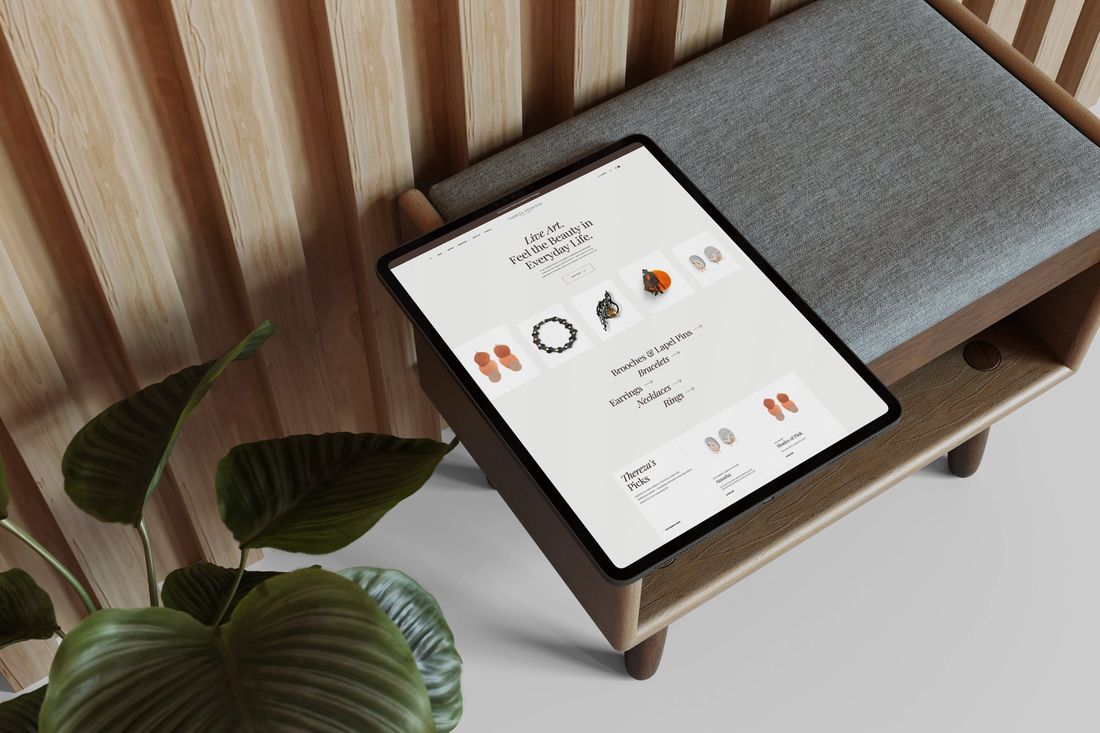
When we built Thereza Pedrosa Gallery's Shopify store in November 2025, it had 47 products from 40 artists. By September 2026 it had 208 products from 44 artists, on the same structure, with a page per artist.
That's what "it grows with you" looks like in real life. The catalog more than quadrupled, and nothing had to be rebuilt, because the structure was planned around how people actually shop for art jewelry: by the artist first.
Shopify vs WooCommerce, Wix and Lightspeed
These are the platforms we see most when brands come to us. All of them can run a good store. The difference is who takes care of what, and where each one is strongest.
What it is | Hosting and updates | Strongest when | Watch out for | |
|---|---|---|---|---|
Shopify | An all-in-one ecommerce platform | Included | Products are the heart of your business and you want to grow | The monthly plan and the apps |
WooCommerce | A free store plugin for WordPress | Your own hosting, and you or a developer keep it updated | You want full control and have someone to maintain it | Hosting, plugins and updates add up, and so does the time |
Wix | A website builder with a store | Included | A simple store next to a website | It was built first as a website builder, so check the store features you'll need later |
Lightspeed | A platform that started with point of sale; its ecommerce side began in Amsterdam as SEOshop | Included | Your physical shop comes first | Fewer themes and apps to choose from than on Shopify |
We build every store on Shopify, and we move stores from Wix, WooCommerce, Lightspeed and Magento. What most founders worry about is Google, which is why every old page gets a 301 redirect to its new address, so the rankings you've built keep working.
Is Shopify worth it for a new brand?
If you sell products and you want to grow, usually yes. You start on Basic for €21 a month, and you don't pay for anything you don't use yet. As the store grows, you add a team, a language or a feature, without moving to another platform. That's the real value: you don't have to build twice.
It's less of a fit when you don't sell products, when you only want a few pages for your business, or when your physical shop runs on another system that works well for you. Not sure where you stand? This takes a minute.
TOOL 1: QUIZ
COST OF A STORE THAT DOESN'T SELL
The platform won't sell for you
Your customers will never tell you why they didn't buy. They close your store on the sofa at night and buy from someone else.
How to start a Shopify store
The technical setup takes an afternoon. What takes longer is everything that goes into it, so it really helps to have these ready before you start, whether you build it yourself or with someone else.
TOOL 3: CHECKLIST
Can you build a Shopify store yourself?
Yes, and Shopify is made so that you can. If you're testing an idea, have a handful of products and more time than budget, doing it yourself is a perfectly good way to start.
Where it gets harder is everything the setup doesn't ask you. How should the products be organized? What does someone need to see on the product page before they trust you with their money? What happens on mobile, where most people will find you? Those are the questions that decide whether a store sells, and they're the ones a theme can't answer for you. That's usually the moment a Shopify agency or freelancer makes sense. I wrote more about choosing between them in the cost article.
Who we are, and what we do as a Shopify agency
We're Design by Karina, a boutique Shopify agency in Rotterdam, working closely with founder-led fashion, beauty and lifestyle brands to turn what makes them special into thoughtful online shopping experiences.
A beautiful website is a good start. But your Shopify store also needs to communicate your value, guide customers through their choices and make buying feel effortless. That's where strategy, design and development come together.
Ecommerce strategy
Who is buying, what do they need to know, and what helps them choose your brand? We define the positioning, customer journey and store structure before design begins.
Shopify design
A store should feel unmistakably yours and make shopping intuitive. We design brand-led Shopify experiences, from the homepage to product pages, with mobile users in mind.
Shopify development & migration
We build stores that are intuitive to shop, easy to manage and ready to grow. Moving from WooCommerce or another platform? We help you make the transition with a clear plan for your store, content and customer experience.
Conversion & retention
We look at what customers need to see, understand and feel before choosing a product, from product messaging to trust-building elements and retention emails.
Growth after launch
We review available data, identify friction in the customer journey and make prioritized improvements over time.
Brand Sites
For coaches, studios and service brands that don't sell online but still need people to choose them.
Why founders choose us as their Shopify agency
Strategy before pixels. Before opening a design file, we want to understand who you're building for, what your customers need to know and what might be stopping them from buying.
A background in product design. Before starting Design by Karina, I worked in product design at Uber's Money Design team in Amsterdam, helping shape payment experiences for drivers.
Fewer projects, more care. We deliberately limit the number of projects we take on at a time, so I'm closely involved in every project and decisions don't get lost between teams.
We say it straight. We'll tell you honestly when something isn't worth the investment, even when the easier answer would be yes. Including when Shopify isn't the right platform for you.
Launch is the starting line. After launch, we keep using real customer behavior to make the store better.
You can see how this looks in practice in our work for Zourani, VYOLA and Thereza Pedrosa Gallery, for brands worldwide.
What does a Shopify store cost with us?
Every store we build starts with understanding your customers, before anything is designed. From there, it depends on what your brand needs:
Package | From | Best for |
|---|---|---|
The Launch | €4,500 | Your first proper store, or a move from Etsy, Instagram or Wix |
The Atelier | €6,900 | An established brand that wants a store designed for it, not a template with a logo on it |
Bespoke | €9,500 | Larger stores with several languages or markets, subscriptions, B2B pricing or a big catalog |
The exact number depends on your products, languages and content, and you'll see every item in your proposal before we start. After launch, the Growth Plan, from €590 a month, keeps improving the store with real customer behavior, because your store is never really finished.
From the studio
What we see with clients
VYOLA makes handmade, made-to-measure body jewelry, and it sold beautifully in person, at events. Online, it lived on an old site that didn't carry that feeling.
Moving to Shopify was the easy part. The real work was deciding what the store had to say. Made to measure means one big doubt: will it fit? So the size guidance and the fit guarantee sit right under the size input, because the answer has to be where the doubt is. That's not a feature of the platform. It's a decision.

VYOLA, a Shopify store for a Belgian body jewelry atelier, with a made-to-measure ordering flow.
Questions
What is Shopify in simple words?
Shopify is an online platform you pay for every month to build and run your own webshop. It takes care of the hosting, security, checkout and payments, so you can focus on your products and your store.
Is Shopify free?
No, but you can try it. Shopify gives you 3 days for free, and then €1 a month for the first 3 months on most plans. After that, plans start at €21 a month, billed yearly.
Is Shopify good for beginners?
Yes. You don't need to code, and the admin is made for people who aren't technical. Setting up is the easy part. Deciding what your store says, and how it's organized, is where it's worth taking your time.
Is Shopify safe for my customers?
Yes. Every plan includes a free SSL certificate, and payments go through Shopify's own checkout. You don't store any card details yourself.
Do I own my Shopify store?
You own your content, products and customer data, and you can export your products, customers and orders whenever you want. The platform itself is rented, which is why you pay every month.
Does Shopify work with iDEAL?
Yes, through Shopify Payments. On Basic, Grow and Advanced, an iDEAL payment costs a flat €0.29, whatever the order value.
Can Shopify do more than one language?
Yes. Translations and markets are included on every plan. Zourani's store, for example, runs in Dutch, French and English for the Netherlands and Belgium.
Can I sell in my own shop with Shopify too?
Yes. Every paid plan includes basic in-person selling with a phone or card reader. For a full shop, Shopify POS Pro costs €79 a month per location, billed yearly, and your online and shop stock stay in one place.
Shopify or WooCommerce: which is better?
It depends on who will take care of the store. Shopify includes hosting, security and updates for a monthly plan. WooCommerce is free to install, but you arrange the hosting and keep it updated yourself, or pay someone to. For most product brands that want to focus on selling, we'd choose Shopify.
What is Shopify Plus?
Shopify Plus is the plan for high-volume brands, from €2,100 a month. It adds a fully customizable checkout, unlimited staff accounts and more locations. Most founder-led brands don't need it.
Can you move my store to Shopify?
Yes. We move stores from Wix, WooCommerce, Lightspeed and Magento, with your products, customers and order history. Every old page gets a 301 redirect to its new address, so the rankings you've built keep working.
Do I need a Shopify agency?
Not to get started. You can set up a store yourself. An agency makes sense when the store has to earn trust and sell, and you want the structure, the design and the content planned around your customers from the start.
What's the best Shopify agency in Rotterdam?
It depends on what your brand needs, so it's worth talking to more than one. If you're a founder-led fashion, beauty or lifestyle brand looking for a strategy-led Shopify store, we'd love to be on your list. Design by Karina is a boutique Shopify agency in Rotterdam, and every project starts with understanding your customers before anything is designed. You can see our work for Zourani, VYOLA and Thereza Pedrosa Gallery, or book a free intro call to see if we're the right fit.
Your store, your numbers
Want a straight answer for your own store? Book a free call and we’ll walk through it together.
Sources
Shopify, About page: sales on Shopify, share of US ecommerce, App Store size (checked October 2026)
Shopify pricing and POS pricing, shopify.com/nl/prijzen and /nl/pos/prijzen (checked October 2026)
Shopify Theme Store, free themes (checked October 2026)
Shopify Help Center: Shopify Payments in the Netherlands
Shop Theme Detector, paid theme prices (August 2026)
Shopify company history: founded in Ottawa in 2006
Thereza Pedrosa Gallery: our build (November 2025) and the live store (September 2026)
Littledata, Shopify conversion rate benchmark (to confirm before publishing)

Karina Paviotti
Founder, Design by Karina
Karina Paviotti is the founder of Design by Karina, a boutique Shopify agency in Rotterdam. Before starting the studio, she worked in product design at Uber, shaping payment experiences for drivers. Today she leads every project, from strategy to launch, for founder-led fashion, beauty and lifestyle brands.


