Websites
How to sell art online in the Netherlands

Karina Paviotti
Founder, Design by Karina
13 min read

To sell art online, you choose where to sell (your own website, a marketplace like Etsy or Saatchi Art, Instagram, or a gallery that sells online), photograph every work well, set prices you can explain, and plan how you'll ship it safely. In the Netherlands, you register with the KVK once you sell regularly, and original work you made yourself has 9% BTW instead of 21%.
In short
Use a platform to be found, and your own website to be remembered. Most artists who sell well online use both.
Pick one way to price your work and use it everywhere, so a buyer never finds the same painting cheaper somewhere else.
A buyer can't touch the work. Your photos, sizes and story have to do what standing in front of it would.
Selling art online isn't mostly about the technology. It's about what someone needs to see before they spend a few hundred, or a few thousand, euros on a piece they've only seen on a screen.
When we built the store for Thereza Pedrosa Gallery, I wasn't allowed to touch a single photo, because the photography is the art. Earrings at €305 sat in the same grid as a painting at €6,600, and every piece was one of one, so each sale emptied a page. None of that is a design problem you solve with a nicer theme. It's a question of what a buyer needs to believe, and in what order. That's what this guide is about, along with the practical part: where to sell, how to price, how to ship, and what the Dutch rules ask of you.
Where can you sell art online?
There are five places artists in the Netherlands usually sell from. They're not either or. Each one does a different job.
What you pay | Who finds you | Who owns the buyer | |
|---|---|---|---|
Your own website | A monthly plan, plus a fee per payment (€0.29 for iDEAL) | People who already know your name, and Google | You |
Etsy | €0.20 per listing, 6.5% per sale, plus payment fees | Etsy's own shoppers, worldwide | Mostly Etsy |
Saatchi Art | About 40% of each sale | Collectors browsing original art | Saatchi Art |
Nothing to post, payment fees when you sell | Your followers and their friends | Partly you | |
A gallery | Often 40% to 50% of each sale | The gallery's collectors | The gallery |
A marketplace brings you buyers you could never reach alone, which is a real reason to be there, especially at the start. The price is that the buyer belongs to the platform: you get a sale, but often not the email address, and not the next sale. Your own website is the opposite. It doesn't bring strangers on its own, but everyone who finds you there stays yours.
Your own website or a platform?
If you can only do one thing this month, start where your buyers already are. If people already ask you "is this still available?" in your messages, you don't need a marketplace to find them. You need a place where they can buy without waiting for your answer.
That's what your own website is for. It's where a collector who saw your work at an open studio, a market or on Instagram goes to look again, read the story and buy, on their own time. It's also the only place where the whole experience is yours: how the work is shown, what's said about it, and what happens after the sale.
Selling art without a gallery
You can, and many artists do. But a gallery does three things for you: it finds buyers, it gives the work credibility, and it handles the sale. Without one, your website has to do the second and third. That's why the photos, the story and the details matter more on an artist's site than on almost any other store.
If you want to sell from your own site, a Shopify store gives you a checkout, iDEAL and shipping rates that already work, so your time goes to the work and how it's shown. We wrote a step-by-step plan for that in How to start a webshop in the Netherlands.
Photograph your work like it's the only thing a buyer will see
Online, it is. Nobody can step back, look closer or see the texture in the light. So every work needs the same set of photos:
The work straight on, edges square, in soft daylight, with the colors as close to real as you can get them.
A detail of the surface, so people see the brushwork, the paper or the glaze.
The work on a wall or in a room, so the size makes sense. A sofa or a chair next to it says more than "60 × 80 cm".
The sides and the back, for canvases and objects, so people know how it hangs and how it's finished.
Resist editing the colors to look better than the work. A buyer who's disappointed when the box opens won't buy again, and may send it back.
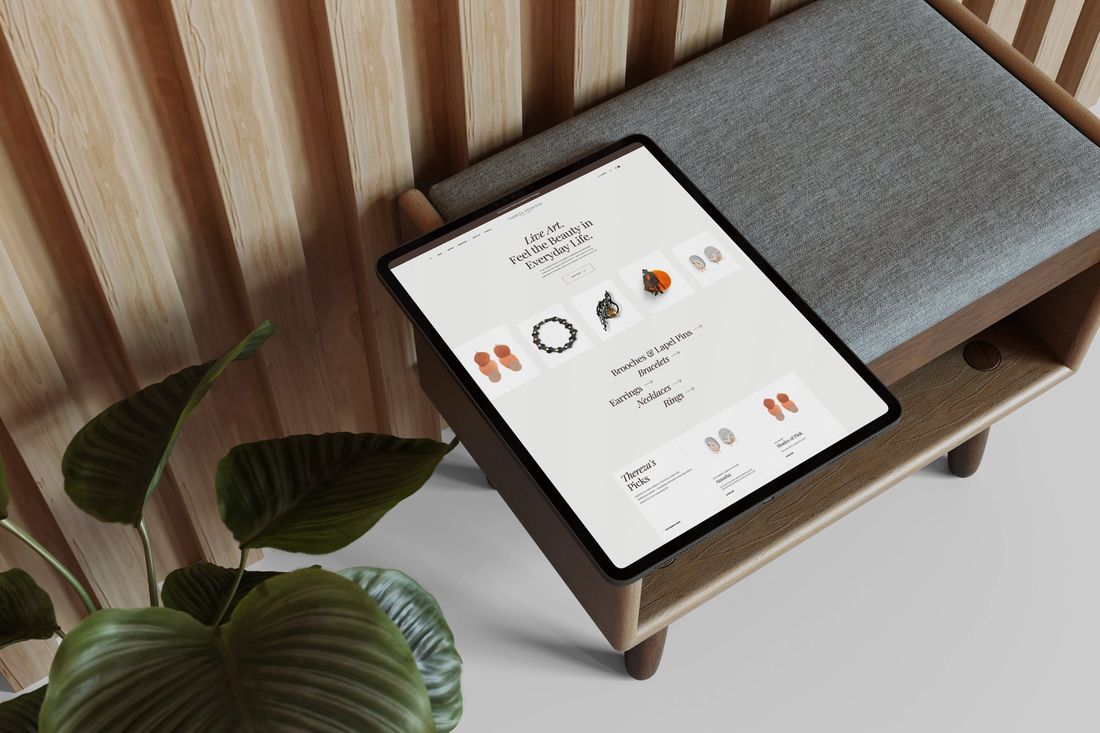
Thereza Pedrosa Gallery, a Shopify store we designed. Each piece sits on a calm, neutral background, so the work does the talking.
How to price your art
Pricing is where most artists get stuck, because it feels personal. It helps to treat it as a method rather than a feeling. There are three common ones:
By size. Add the width and height in centimeters and multiply by a factor. A 60 × 80 cm painting with a factor of 5 is (60 + 80) × 5 = €700, plus your materials and frame. When you sell more, show more, or the waiting list grows, the factor goes up.
By time and materials. Your hours times an hourly rate, plus materials. Fair, but it can make your slowest work your most expensive, whether or not it's your best.
By comparison. Look at what artists at a similar stage, with similar work and sizes, ask in the Netherlands. Use it to check the other two methods, not to replace them.
Whichever you pick, use it for everything, and keep the price the same everywhere you sell. If a gallery sells your painting for €1,200 and your website has it for €700, you've told the gallery's collectors what the work is worth, and it isn't €1,200. Price consistency is what lets your prices go up over time.
TOOL: ART PRICE
Originals, prints and commissions
Most artists who make a living online sell more than originals. Three lines usually work together:
Originals | Prints | Commissions | |
|---|---|---|---|
What it is | The one-of-one work | Reproductions, open or in a limited, numbered edition | A work made for one buyer, to their wishes |
Price | Your full price | Lower, so more people can own your work | Your full price, often with a deposit |
BTW in the Netherlands | 9% when you sell your own work | Usually 21% | 9% for an original work of art |
Returns | 14 days, the EU right to cancel | 14 days | Usually no right to cancel, because it's made to their wishes |
Prints are a good way in for people who love your work but aren't ready for an original. Just keep them clearly apart on your website, so nobody wonders whether they're buying the painting or a copy of it.
What your artist website needs
An artist's website doesn't need many pages. It needs the right ones, and it needs every work to answer the same questions:
Each work: title, year, medium, size, price (or "price on request", if you must), and whether it's available. Plus the photos from above.
A few lines about the work, in your words: what it is, where it came from. Not a full statement, just enough to make it personal.
Series or collections, so people can see a body of work, not a pile of pieces.
About, with a real photo of you or your studio. People buy art from a person.
Commissions, with how it works, a starting price and a simple form.
Shipping and returns, in plain words, linked from every work.
A newsletter sign-up, so a collector can hear about the next series before anyone else.
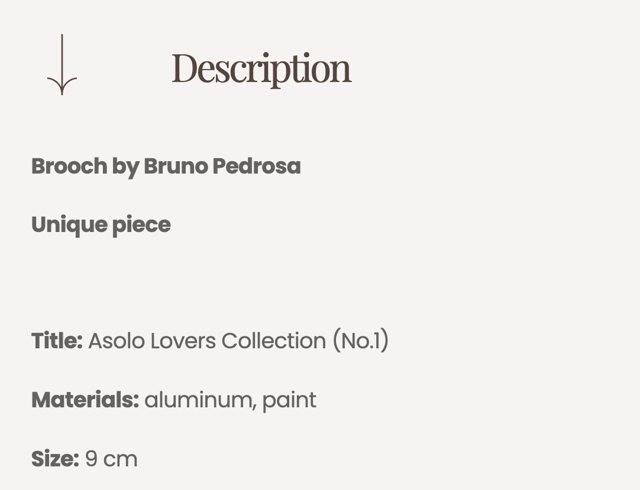
Screenshot: Thereza Pedrosa GalleryWho made it, that it's a unique piece, the title, the materials, the size. Short, in the same order on every piece, so a collector knows exactly where to look.
Keep sold work visible
On the gallery's store, sold pieces stay on the site with a badge instead of disappearing. A sold work shows that people buy from you, and it gives a buyer a reason to ask for something similar.
If you'd rather show your work without a full store, a portfolio site with an inquiry form can work too. We design both: a Brand Site for artists who sell by conversation, and a Shopify store for artists ready to sell online. You'll find more on our page for artist websites and our page on Shopify for art and galleries.
Shipping art safely
The moment a buyer opens the box is part of the work. Pack every piece as if it'll be thrown, because sometimes it will be:
Protect the surface first, then the corners, then wrap the whole work in bubble wrap.
Use a sturdy box with room for padding on every side, or a box inside a box for anything fragile.
Add a handwritten card. It costs nothing and it's what people remember.
For large or valuable work, use a courier that ships art, and insure it for its full price.
Say what shipping costs on every work, not only at checkout. In Baymard Institute's research, extra costs like shipping are the top reason people leave a checkout (40%). With art, a surprise at the end feels even worse, because the buyer has already pictured it on their wall.
KVK, BTW and the rules in the Netherlands
If you sell regularly and want to make a profit, you usually count as a business, and you register with the KVK. If you only sell a work now and then, you might not need to. The KVK has a checklist on its website to help you decide.
Original art that you made and sell yourself has the low BTW rate of 9%, not 21%. Prints and posters usually have 21%, although some limited, signed editions can count as art. If your turnover stays under €20,000 a year, you can choose the kleineondernemersregeling (KOR) and not charge BTW at all, but then you can't reclaim BTW on your materials either. Your accountant can tell you what fits.
Your website also has to show who's behind it: your name or business name, a physical address, an email address and your KVK and BTW numbers. And buyers can cancel an online purchase within 14 days, except for work you made to their wishes, like a commission.
Selling from Belgium?
The steps are the same, but you register in the KBO through an ondernemingsloket, original art sold by the artist has 6% BTW, the vrijstellingsregeling goes up to €25,000 turnover a year, and Belgian buyers expect Bancontact at checkout.
Getting found
Your first buyers usually already know you: from open studios, markets, exhibitions or Instagram. Make it easy for them first. Put your website in your bio, send your newsletter when a new series is ready, and answer "is this available?" with a link to the work.
Then help Google find you. Give each work a page with its title and medium in the page title ("Maas blue, acrylic on canvas, 60 × 80 cm"), describe the photos in the alt text, and write a few lines about each series. People search for art by style, subject and city, so use the words they'd use, like "abstract painting Rotterdam" or "ceramics artist Utrecht".
NOT A TOOL
What a buyer can't see
A collector standing in front of your work can see its size, its surface and its price on the wall. Online, they only see what you show them.
Who we are, and what we do
We're Design by Karina, a boutique Shopify agency in Rotterdam, working closely with founder-led fashion, beauty and lifestyle brands, and with artists and galleries, to turn what makes them special into thoughtful online shopping experiences.
Ecommerce strategy
Who is buying, what do they need to know, and what helps them choose your work? We define the positioning, customer journey and structure before design begins.
Shopify design
A store should feel unmistakably yours and make buying intuitive. We design every page with mobile users in mind.
Shopify development & migration
Stores that are easy to manage and ready to grow. Moving from Etsy, Wix or WooCommerce? We plan the move with you.
Conversion & retention
What buyers need to see, understand and feel before they choose, from the work's details to the emails after the sale.
Growth after launch
We look at how real visitors use your site and make prioritized improvements over time.
Brand Sites
For artists, coaches and studios who sell by conversation, and still need people to choose them.
Why artists and founders choose us
Strategy before pixels. Before opening a design file, we want to understand who buys your work and what they need to see first.
A background in product design. Before starting Design by Karina, I worked in product design at Uber, helping shape payment experiences for drivers.
Fewer projects, more care. We limit the number of projects we take on at a time, so I'm closely involved in every one.
We say it straight. If you don't need a full store yet, we'll tell you.
Launch is the starting line. After launch, we keep improving the site with what real visitors do.
What does an artist website cost with us?
How we work | From | Best for |
|---|---|---|
Brand Site | €2,900 | A portfolio site with your work, your story and an inquiry form, for artists who sell by conversation |
The Launch | €4,500 | Your first proper store, or a move from Etsy, Instagram or Wix |
The Atelier | €6,900 | An established artist or gallery that wants a store designed around the work |
Growth Plan | €590 / month | A site that's already live. We pick the change that matters most, make it and report back every month, for at least three months. |
The exact number depends on how many works, series and languages you have, and you'll see every item in your proposal before we start.
The short version
Be on a platform to be found, and build your own website to be remembered. Photograph every work straight, in detail and in a room. Pick one way to price, and keep the price the same everywhere. Register with the KVK when you sell regularly, charge 9% BTW on your originals, and say what shipping costs before checkout. Then tell the people who already love your work first.
From the studio
What we see with clients
For Thereza Pedrosa Gallery, we built the store around the artists instead of the categories: a page for every maker, with their pieces together. The gallery's catalogue has since grown from 47 to 208 pieces, and that structure held. With art, people often come for a maker before they come for a type of object, and the site should follow how they look.
Questions
How can I sell my art online?
Choose where to sell (your own website, Etsy, Saatchi Art, Instagram or a gallery), photograph every work straight on, in detail and in a room, and give each one a title, size, medium and price. Decide how you'll pack and ship it, and in the Netherlands, register with the KVK once you sell regularly.
Where is the best place to sell art online?
It depends on what you need. A marketplace like Etsy or Saatchi Art brings you new buyers, but they stay the platform's customers. Your own website brings fewer strangers, but every buyer stays yours. Most artists who sell well use both.
Can I sell art online without a gallery?
Yes. Without a gallery, your website has to give the work credibility and handle the sale. That's why good photos, clear details, a real about page and visible shipping costs matter so much on an artist's site.
How do I price my art?
A common method is by size: add the width and height in centimeters, multiply by a factor and add your materials. A 60 × 80 cm painting with a factor of 5 is €700 plus materials. Use the same method for everything, and keep the price the same everywhere you sell.
Do I need to register with the KVK to sell art?
If you sell regularly and want to make a profit, usually yes. If you only sell a work now and then, you might not need to. The KVK has a checklist on its website to help you decide.
What BTW do I charge on art in the Netherlands?
Original art that you made and sell yourself has 9% BTW. Prints and posters usually have 21%. Under €20,000 turnover a year, you can choose the KOR and not charge BTW, but then you can't reclaim it on your costs. Check your situation with an accountant.
How much do Etsy and Saatchi Art take?
Etsy charges €0.20 per listing, 6.5% of each sale and a payment fee. Saatchi Art takes about 40% of each sale. A gallery often takes 40% to 50%. Fees change, so check them on each platform before you list.
Do I need my own website as an artist?
Not on day one, but it's the only place where buyers stay yours and where the work is shown exactly the way you want. Even a simple site with your work, your story and a way to buy or ask makes a difference.
How do I ship a painting safely?
Protect the surface, then the corners, wrap the work in bubble wrap and use a sturdy box with padding on every side. For large or valuable work, use a courier that ships art, and insure it for its full price.
Can buyers return art they bought online?
Yes, within 14 days, under the EU right to cancel. The exception is work made to the buyer's own wishes, like a commission. Put this in a clear returns page, linked from every work.
How do I sell art online in Belgium?
The steps are the same, but you register in the KBO through an ondernemingsloket, original art sold by the artist has 6% BTW, the vrijstellingsregeling goes up to €25,000 a year, and Belgian buyers expect Bancontact at checkout.
What does an artist website cost?
Building it yourself costs your time and a monthly plan. With us, a Brand Site for artists starts at €2,900 and a Shopify store at €4,500 with The Launch. Every item is in the proposal before we start.
Your store, your numbers
Want a straight answer for your own store? Book a free call and we’ll walk through it together.
Sources
Belastingdienst and Taxence, 9% BTW on works of art delivered by the maker (to confirm on belastingdienst.nl)
Belastingdienst, kleineondernemersregeling (KOR), €20,000 turnover limit
Etsy, seller fees (to confirm on etsy.com/legal/fees)
Saatchi Art, artist commission (to confirm on saatchiart.com)
Baymard Institute, reasons for checkout abandonment (updated September 2025)
Shopify Payments, iDEAL fee (October 2026)
EU consumer rights: the 14-day right of withdrawal, and the exception for goods made to the buyer's specifications
VLAIO, KBO registration; FOD Financiën, 6% BTW on art and the vrijstellingsregeling (to confirm)
Screenshots: Thereza Pedrosa Gallery (October 2026)
Karina Paviotti
Founder, Design by Karina
Karina Paviotti is the founder of Design by Karina, a boutique Shopify agency in Rotterdam. Before starting the studio, she worked in product design at Uber, shaping payment experiences for drivers. Today she leads every project, from strategy to launch, for founder-led fashion, beauty and lifestyle brands.


